
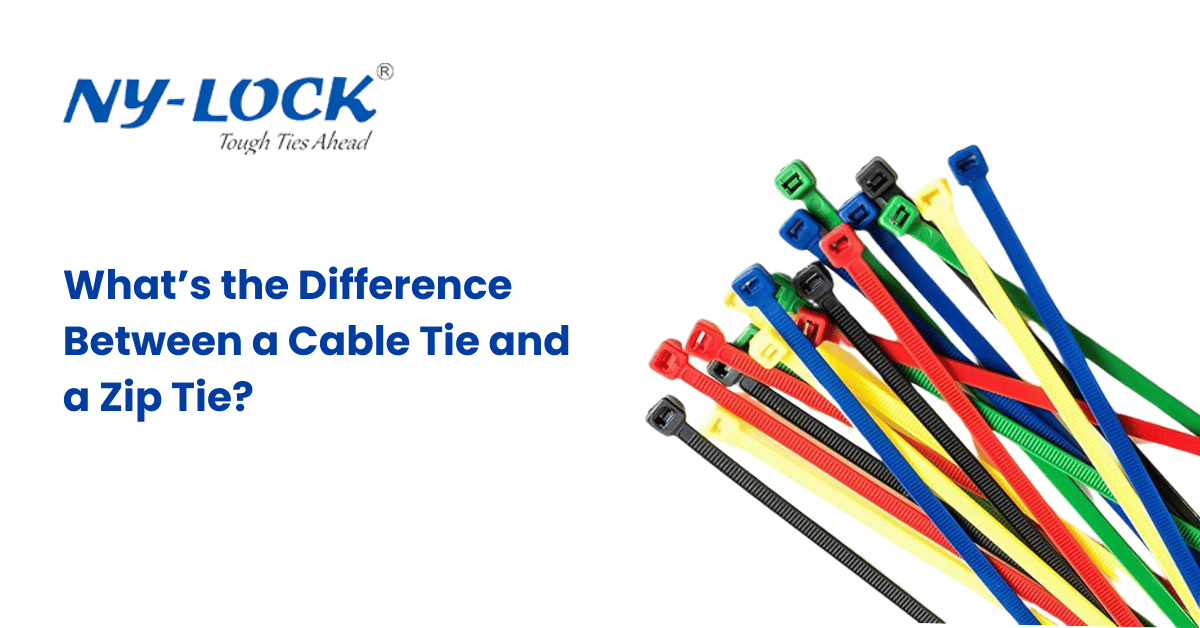
A majority of homes, offices, and industrial work sites use cable ties and zip ties to secure, bundle, and organise things. Even though the terms ’cable ties‘ and ‘zip ties’ are used a lot, some believe that they describe different tools. The confusion between cable ties and zip ties is cleared up in this blog, and the article also discusses why Coloured cable ties are becoming more popular in today’s applications.
What is the difference between cable ties and zip ties?
At first sight, cable ties and zip ties seem to have the same look and usage. They are normally made of tough nylon and have a rigid shape that matches a small ratcheting head. As soon as they are tightened, they keep items well secured, and people appreciate their simple and durable nature.
The main distinction is in the labels used instead of in how things work. When working in electrical work, networking, and industrial design, the formal name for this object is “cable tie.” This is what the actual purpose of these tools is: to keep electrical wires well-organised and secure.
On the other hand, “zip tie” is used more informally and by some people. People started wearing ties because of the unique “zip” noise when the tie is wrapped around the neck. Even though zip ties and cable ties are both used for the same product, the first one is more commonly heard in everyday talk, while the second one is predominantly used by professionals.
Why are coloured cable ties in trend these days?
Using Coloured cable ties is an important development in this area because it helps users to spot and organise their items by colour. These labels help a lot in tough cable systems, large constructions, and event preparation, as visually telling them apart is necessary.
Different Types of Cable Ties
Cable ties are available in various materials, sizes, and designs to suit different industrial and commercial applications. While standard nylon cable ties are commonly used for basic cable management, specialized cable ties are designed for high temperatures, outdoor environments, heavy loads, and reusable applications.
UV Resistant Cable Ties
UV resistant cable ties are specially manufactured for outdoor use. These cable ties are made from UV-stabilized nylon that can withstand prolonged exposure to sunlight and harsh weather conditions without becoming brittle or cracking.
Common applications include:
- Solar panel installations
- Outdoor electrical wiring
- Telecom infrastructure
- Garden and landscaping projects
- Construction sites
These ties offer excellent outdoor durability and are ideal for environments exposed to direct sunlight.
Stainless Steel Cable Ties
Stainless steel cable ties are designed for extreme environments where high strength, corrosion resistance, and heat resistance are required. They are commonly used in marine, chemical, oil & gas, and industrial sectors.
Key benefits:
- High tensile strength
- Excellent corrosion resistance
- Fire and heat resistance
- Suitable for harsh industrial conditions
Common applications:
- Marine installations
- Chemical plants
- Aerospace industry
- Heavy machinery
- Underground cable management
Releasable cable ties are reusable ties that feature a release mechanism for easy removal and reinstallation. Unlike standard self-locking ties, these can be opened without cutting.
Advantages:
- Reusable and cost-effective
- Reduces material waste
- Ideal for temporary installations
- Easy cable maintenance
Common uses:
- Event management
- Temporary wiring
- Prototype assembly
- Data center cable management
Heavy Duty Cable Ties
Heavy duty cable ties are manufactured for applications requiring extra strength and durability. These ties are thicker and wider than standard cable ties and can handle heavier cable bundles and industrial loads.
Features:
- High tensile strength
- Durable locking mechanism
- Suitable for industrial use
- Available in long lengths
Applications:
- Construction projects
- Automotive harnessing
- Industrial equipment
- Warehouse packaging
- Large cable bundles
Mountable Cable Ties
Mountable cable ties include a mounting hole that allows cables to be securely fixed to walls, panels, or surfaces using screws or bolts.
Benefits:
- Organized cable routing
- Improved cable stability
- Reduces cable movement
- Ideal for permanent installations
Common applications:
- Electrical control panels
- Automotive wiring
- Network cabinets
- Machinery installations
Colored Cable Ties
Colored cable ties are widely used for cable identification, color coding, and organized cable management. Different colors help simplify maintenance and improve safety in complex wiring systems.
Popular uses:
- Electrical phase identification
- Network cable organization
- Warehouse inventory coding
- Event setup management
Colored ties are available in multiple sizes and materials for both indoor and outdoor applications.
Heat Resistant Cable Ties
Heat resistant cable ties are specially designed for high-temperature environments where standard nylon ties may fail. These ties can maintain their strength and performance under elevated temperatures.
Advantages:
- High thermal stability
- Suitable for engine compartments
- Resistant to heat deformation
- Long service life
Applications:
- Automotive engines
- Industrial machinery
- HVAC systems
- Manufacturing plants
What Materials Are Cable Ties Made From?
Cable ties are manufactured using different materials depending on the application, environmental conditions, and required strength. Choosing the correct material helps improve performance, durability, and safety.
Nylon 6/6 Cable Ties
Nylon 6/6 is the most commonly used material for cable ties because of its excellent strength, flexibility, and cost-effectiveness. These cable ties are suitable for general-purpose indoor applications.
Key features:
- Strong and lightweight
- Good abrasion resistance
- Excellent insulation properties
- Suitable for electrical applications
Common applications:
- Electrical wiring
- Office cable management
- Industrial packaging
- Household organization
Nylon 6/6 cable ties typically perform well in temperatures ranging from -40°C to 85°C.
UV Stabilized Nylon Cable Ties
UV stabilized nylon cable ties are specially formulated for outdoor environments. Carbon black and UV stabilizers are added to improve resistance against ultraviolet radiation and weather exposure.
Benefits:
- Long outdoor service life
- Resistant to sunlight damage
- Improved weather resistance
- Better durability in harsh climates
Ideal applications:
- Solar installations
- Outdoor electrical projects
- Telecom towers
- Construction sites
Stainless Steel Cable Ties
Stainless steel cable ties provide maximum durability and resistance in demanding industrial environments. These ties are commonly manufactured using grade 304 or 316 stainless steel.
Key advantages:
- Corrosion resistant
- Fire resistant
- High tensile strength
- Suitable for chemical exposure
Common industries:
- Marine
- Oil & gas
- Chemical processing
- Aerospace
These cable ties can withstand extremely high temperatures and harsh environmental conditions.
Polypropylene Cable Ties
Polypropylene cable ties are preferred in applications requiring excellent chemical resistance. They are lighter than nylon and perform well in acidic or chemical-rich environments.
Benefits:
- Chemical resistant
- Lightweight
- Good flexibility
- Resistant to moisture
Common applications:
- Laboratories
- Chemical industries
- Water treatment plants
- Food processing facilities
Temperature Resistance and Durability
Different cable tie materials are designed to handle varying temperature ranges and environmental conditions.
| Material | Temperature Resistance | Best Use |
|---|---|---|
| Nylon 6/6 | -40°C to 85°C | General indoor use |
| UV Stabilized Nylon | Outdoor weather resistant | Outdoor installations |
| Stainless Steel | Extremely high temperatures | Industrial applications |
| Polypropylene | Moderate heat resistance | Chemical environments |
Selecting the correct material helps ensure better performance, longer service life, and safer cable management.
Common Uses of Cable Ties
- Electrical wiring
- Solar installations
- Automotive cable management
- Warehouse packaging
- Networking
- Event management
How to Use Cable Ties Safely
- Avoid Over-Tightening
- Use UV-Resistant Cable Ties Outdoors
- Trim Edges Safely
- Avoid Excessive Heat Exposure
- Choose the Correct Tensile Strength
Conclusion
Basically, people use the terms cable tie and zip tie for the same product, based on how it is introduced in a given situation. Either way you look at it, both have the same benefits and dependability. If you want to make organising and colour-coding easier, coloured cable ties are an excellent way to do it in a simple way. If you’re looking for coloured cable ties and want only high-quality products, go to NY-Lock online.